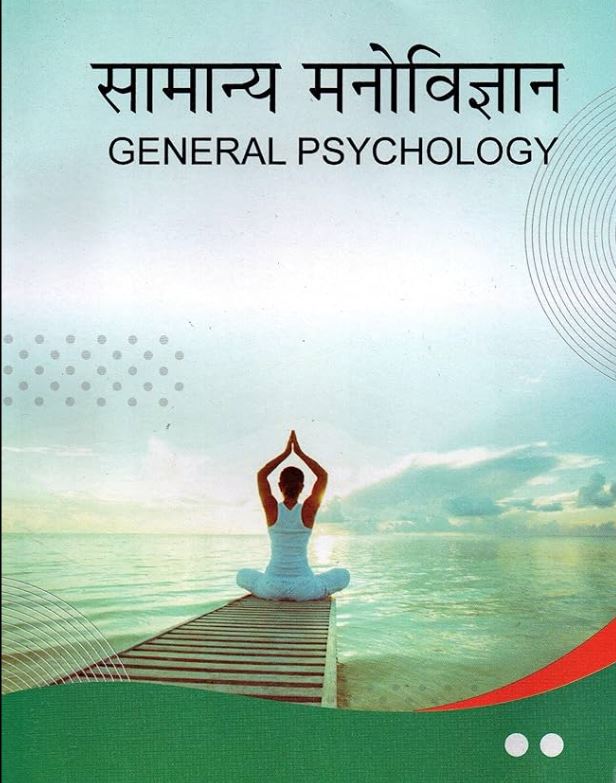
General Psychology provides a foundation for understanding how and why people behave the way they do. The course covers:
1. Introduction to Psychology
-
Definition, goals (description, explanation, prediction, control)
-
Psychology as a science
-
Major fields: clinical, counseling, social, educational, developmental, industrial/organizational, etc.
-
Research methods: observation, experiment, survey, case study, interview
2. Biological Basis of Behavior
-
Neurons and nervous system
-
Brain structure and function
-
Endocrine (hormonal) system
-
Relationship between biology and behavior, emotion, motivation
3. Sensation, Attention, and Perception
-
Sensory processes and thresholds
-
Factors affecting attention
-
Perceptual organization (Gestalt principles)
-
Depth perception, illusions
4. Learning
-
Definition and factors influencing learning
-
Classical Conditioning (Pavlov)
-
Operant Conditioning (Skinner)
-
Trial and Error (Thorndike)
-
Cognitive learning (Insight, Observational learning)
5. Memory and Forgetting
-
Stages: Encoding, Storage, Retrieval
-
Types: Sensory, Short-Term (STM), Long-Term (LTM)
-
Causes of forgetting (interference, decay, repression)
-
Techniques for improving memory
6. Motivation and Emotion
-
Biological and social motives (hunger, thirst, achievement, affiliation)
-
Theories of motivation (Drive, Incentive, Maslow)
-
Nature and expression of emotions
-
Theories of emotion (James–Lange, Cannon–Bard, Schachter–Singer)
7. Intelligence
-
Definition and measurement (IQ)
-
Major theories (Spearman, Gardner, Sternberg)
-
Individual differences
-
Emotional Intelligence (EI)
8. Personality
-
Meaning, traits, and determinants (heredity, environment)
-
Personality theories: Psychoanalytic (Freud), Trait theories, Humanistic views
-
Personality assessment (inventory tests, projective tests)
- Teacher: Kishor Kafle